The Psychology of “Guided Selling” and Why Shoppers Want to Be Told What to Buy
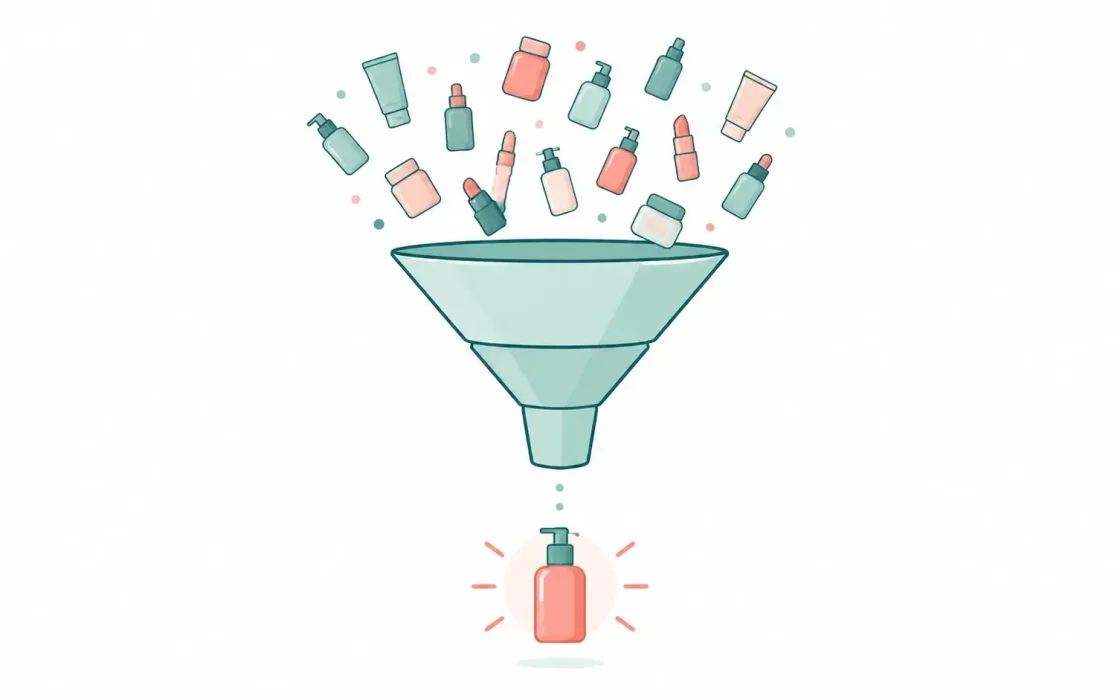
There’s a strange thing that happens when you hand someone too many options: they don’t feel empowered. They feel tired. Give a shopper three moisturizers and they’ll pick one in ten seconds. Give them thirty, and a meaningful number of them will close the tab and buy nothing at all. This isn’t a personal failing on the shopper’s part, it’s a well-documented psychological pattern, and it’s the entire reason guided selling exists as a strategy.
If you run a Shopify store and you’ve ever wondered why a product recommendation quiz seems to outperform a beautifully organized product grid, the answer isn’t about design. It’s about psychology.
The paradox of choice, explained properly
The idea that “more options equals more sales” feels intuitive, and it’s mostly wrong. Psychologist Barry Schwartz popularized the term paradox of choice to describe a well-studied effect: past a certain point, additional options don’t increase satisfaction or purchase likelihood; they decrease both. One of the most cited demonstrations of this is a jam-tasting study, where a table offering 24 jam varieties attracted more browsers but converted at a small fraction of the rate of a table offering just 6.
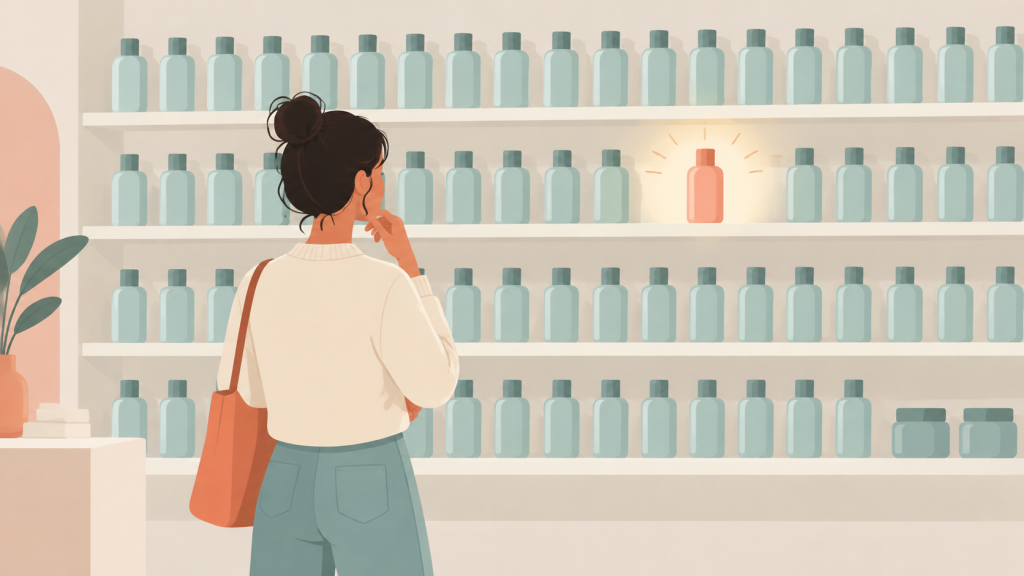
The mechanism behind this is what behavioral researchers call decision fatigue, the idea that every choice a person makes draws down a limited pool of mental energy, and that pool depletes over the course of a day, or even over the course of a single shopping session. By the time a shopper has scrolled through product 15 of 30, they have less cognitive energy left to actually evaluate product 16 than they did to evaluate product 1. Somewhere around that point, “I’ll think about it later” becomes the path of least resistance, and “later” usually means never.
This is choice overload in action, and it’s the single biggest, least-discussed driver of cart abandonment in ecommerce. Shoppers don’t always leave because of price or shipping cost. Often, they leave because choosing became more exhausting than not choosing at all.
| Catalog size shown to shopper | Typical psychological effect | Likely shopper behavior |
| 3–6 options | Easy comparison, low cognitive load | Quick decision, high completion rate |
| 10–15 options | Moderate fatigue begins to set in | Slower decision, more back-and-forth comparison |
| 20+ options | Significant decision fatigue, comparison becomes overwhelming | Tab abandonment, “I’ll decide later,” cart abandonment |

Why being told what to buy feels like relief, not control
Here’s the part that seems counterintuitive at first: shoppers actually want to be told what to buy. Not in a pushy, salesy way but in the way a good salesperson in a physical store does it. Someone who asks a few quick questions, listens to the answers, and says “based on what you told me, this is the one.” That interaction doesn’t feel like a loss of control. It feels like relief.
This is the core insight behind guided selling psychology: removing choice doesn’t have to mean removing agency. A shopper who answers four or five quiz questions and gets handed a single, well-reasoned recommendation still feels like they made the decision because in a sense, they did. They just made it through a much shorter, much less exhausting path than sifting through an entire catalog.
There’s a name for this in decision science: choice architecture, the idea that how options are presented shapes the decision as much as the options themselves. A quiz funnel is choice architecture in its most literal form. It doesn’t remove the shopper’s autonomy; it structures the path to a decision so the shopper never has to face the full weight of the catalog at once.
This is also why a good skincare quiz, supplement quiz, or fragrance quiz outperforms a static “shop by concern” filter. A filter still leaves the shopper holding a shortlist of 8 products and asking themselves, again, “okay, but which of these is actually for me?” A quiz closes that loop. It doesn’t stop at narrowing the field; it ends in an answer.
The trust mechanism behind guided selling
There’s a second psychological layer at work beyond simple fatigue reduction, and it has to do with trust and perceived expertise.
When a shopper is handed a recommendation with visible reasoning attached “based on your answers, we recommend this because X” it reads less like marketing and more like advice. That distinction matters enormously. Marketing is something a shopper is inherently skeptical of. Advice, especially advice that appears personalized and reasoned, gets a very different psychological reception. It activates something closer to the trust a person extends to a knowledgeable friend or a professional, not the trust (or lack of it) they extend to an ad.
This is precisely why personalized product recommendations generated through a quiz tend to convert at meaningfully higher rates than generic “customers also bought” widgets. The generic widget is inferred from aggregate behavior it’s a guess dressed up as a suggestion. A quiz-based recommendation is built directly from what the shopper just told you about themselves. It feels earned rather than algorithmic, even though both are, technically, algorithms.
Why this matters more for certain categories
Guided selling isn’t equally valuable across every kind of product. It matters most where at least one of these conditions is true:
- The catalog is large. More SKUs means more potential for decision fatigue to set in before a shopper finds what they need.
- The right choice depends on personal characteristics the shopper may not know how to self-diagnose. Skin type, body type, dietary needs, fragrance preference. These are all areas where a shopper’s self-assessment is frequently wrong, which is exactly why categories like skincare, supplements, and beauty see some of the strongest lift from quiz-based guided selling.
- The purchase carries some risk of “getting it wrong.” Higher price points, ingredients that could cause a reaction, or gifts intended for someone else all raise the shopper’s anxiety about choosing poorly and anxiety is one of the strongest accelerants of decision paralysis.
If your store sits at the intersection of a large catalog and a personal, high-stakes decision, guided selling isn’t a nice-to-have feature. It’s addressing the exact psychological friction that’s currently costing you conversions.
| Product category | Why self-diagnosis is unreliable | Typical lift from guided selling |
| Skincare & beauty | Skin type and concerns are frequently misidentified by the shopper | High |
| Supplements & vitamins | Needs depend on health goals and lifestyle factors shoppers rarely evaluate accurately alone | High |
| Fragrance | Preference is highly subjective and hard to filter by category alone | Moderate to high |
| Gifting | Shopper is choosing for someone else’s preferences, not their own | Moderate to high |
| Apparel & footwear | Sizing and fit vary by brand, adding uncertainty beyond stated preference | Moderate |
Building guided selling into your store
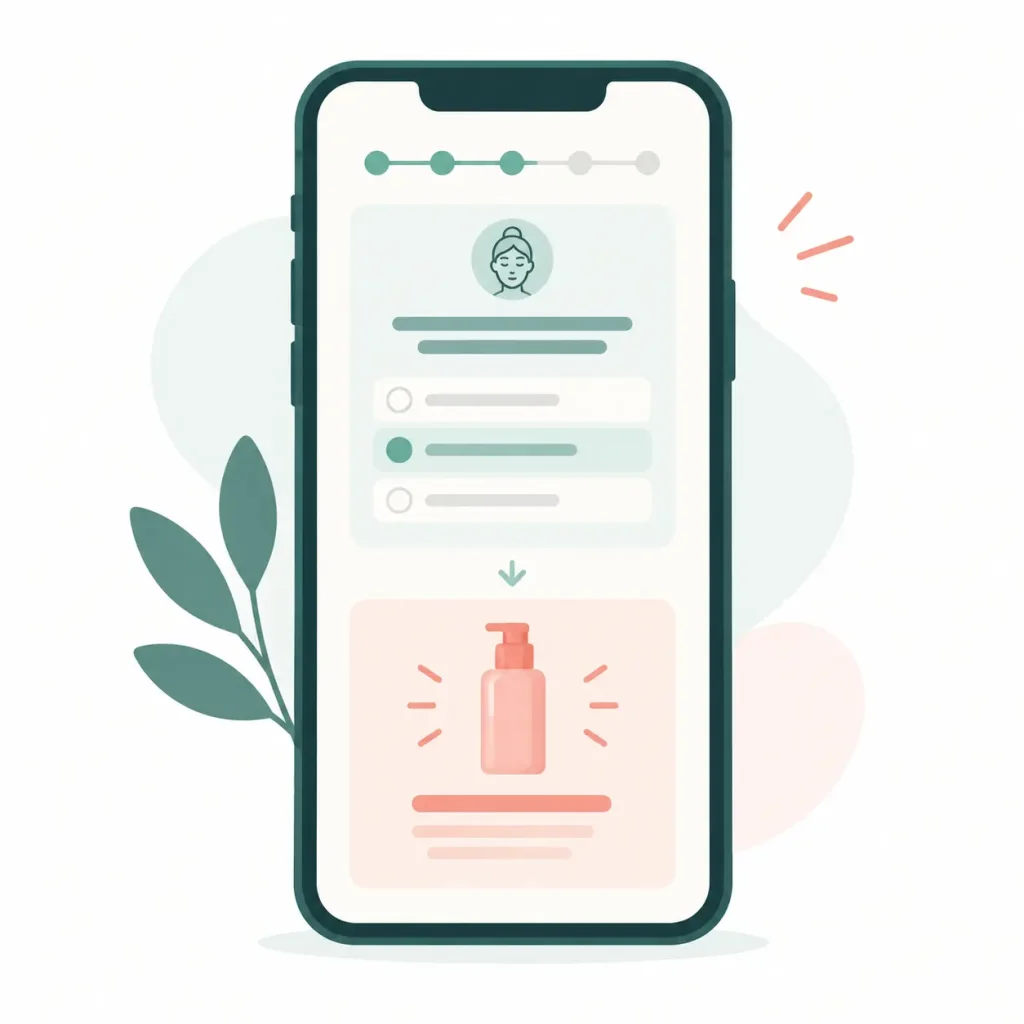
The practical version of all this, on a Shopify store, is a quiz-based guided selling experience: a short sequence of questions that narrows a large catalog down to a single, well-reasoned recommendation, ideally with the reasoning shown, not hidden. Done well, it doesn’t feel like a marketing gimmick to the shopper. It feels like the thing they actually wanted from your store in the first place: someone (or something) to just tell them what to buy.
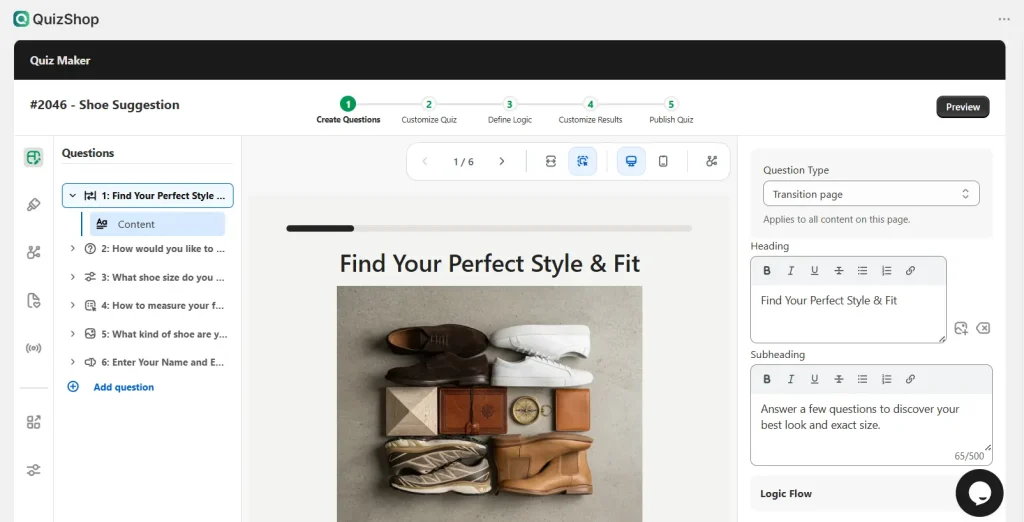
That’s the whole psychological trick behind guided selling, and it’s why an AI quiz maker built specifically for ecommerce recommendation logic tends to outperform generic quiz-building tools that were designed for lead capture or entertainment content. The goal isn’t just collecting an answer, it’s replicating the feeling of being helped by someone who actually knows what they’re talking about.
Want to bring guided selling to your Shopify store? QuizShop is the AI Quiz Maker built to turn browsing into a guided, personalized recommendation reducing decision fatigue and turning a large catalog into a single confident answer.